NASA Research Division | Joint Biomechanics Unit
The Real Reason Your Knee Keeps Getting Worse — And Why Every Treatment You've Tried Has Failed
A retired NASA engineer who spent 32 years designing mechanical joints for space missions just revealed the hidden cause of chronic knee pain — and it has nothing to do with age, posture, or genetics.
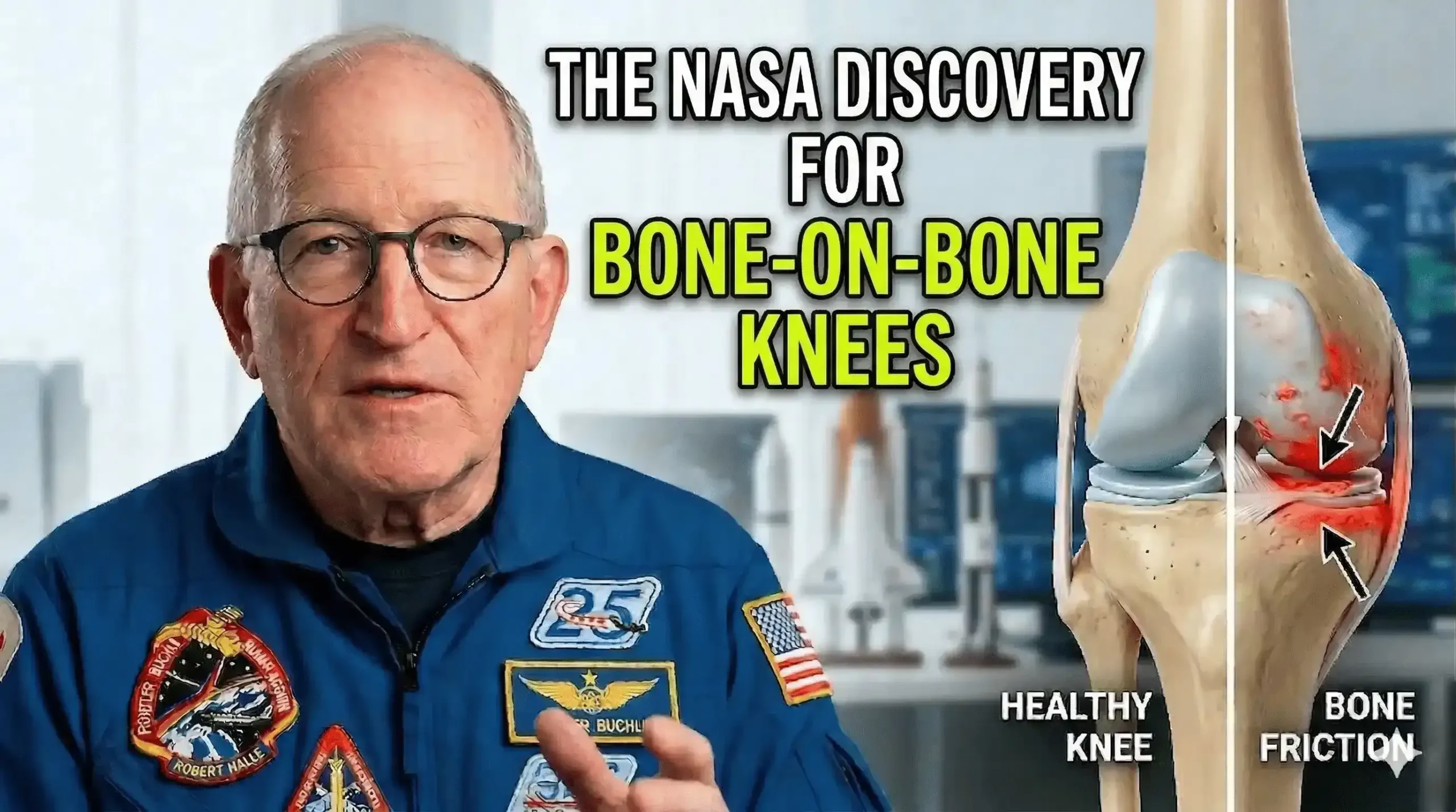
If you've been told your knee pain is just "wear and tear" — or worse, that surgery is your only option — you're not alone. Millions of Americans over 55 are living with chronic knee pain that gets worse every year, despite trying pain relievers, cortisone shots, physical therapy, and every supplement available on the shelf.
But here's what almost no one is talking about: the pain isn't the problem. It's a symptom of something happening deep inside your joint — something that standard medicine was never designed to fix.
Why Every Treatment Has Failed You
Every treatment you've tried works the same way — it masks the pain signal while the real damage continues underneath.
Pain relievers reduce inflammation temporarily. Cortisone injections numb the joint. Physical therapy strengthens the muscles around it. But none of them address what's actually failing inside the joint capsule.
That's why the pain always comes back. That's why your knee feels worse in the morning. That's why the bone-on-bone grinding gets louder every year.
"You weren't failing the treatments. The treatments were failing you." — Robert Hail, NASA Joint Biomechanics Division
The "Synovial Fluid" Secret
Robert Hail discovered that the real cause isn't age — it's the disappearance of synovial fluid, the joint's internal lubricant. When it dries out or stops signaling properly, the joint collapses regardless of age. His engineering models showed that bone-on-bone friction has nothing to do with overuse, and everything to do with a breakdown in the biomechanical signal that tells your body to produce this fluid.
"Every joint — mechanical or biological — fails for the same reason. Internal lubrication breaks down. Once we understood that, the solution became clear." — Robert Hail, NASA Research Division
Working alongside biochemist, Hail developed a natural compound protocol that reactivates synovial fluid production — rebuilding cartilage, restoring joint pressure, and eliminating pain at the source in under 17 hours. The results were documented across more than 30,500 people of all ages and pain levels.
Conventional doctors never mention this because the system was built to manage chronic pain — not resolve it. Pain relievers, injections, and surgery generate billions in recurring revenue. A natural protocol that corrects the root mechanical failure doesn't fit that model. That's not a conspiracy. It's a business reality.
If you've tried everything and still wake up with knee pain every morning — this may be the most important video you watch this year.
Common Questions From People In Your Situation
Yes. The presentation was specifically designed for people who have already been told surgery is their next step. Robert Hail explains what drives bone on bone progression and what most surgeons are not addressing at the source.
Yes. Because pain relievers do nothing to fix the actual failure happening inside the joint. They address the symptom, not the internal mechanical failure driving the damage. Hail's protocol corrects the root cause — and people using it report no longer needing daily pain management.
In the documented research across 30,500 participants, measurable relief was reported beginning in under 17 hours. Full recovery was observed in approximately 3 weeks. Individual results vary depending on the severity and duration of the condition.
No. You won't find this in clinics, pharmacies, or through insurance. It has been buried because chronic pain generates profit — and a one-time natural protocol that restores synovial fluid doesn't fit that model. Hail made it available directly through a civilian access program.
Yes. Joint failure progresses slowly but consistently. Research cited in the presentation found that within 5 to 7 years, 84% of people with unaddressed bone on bone damage develop irreversible complications. The internal damage continues even when pain is being managed with conventional treatments.